

As US forces amass on Iran’s doorstep and Tehran warns of main repercussions if struggle breaks out, a high-stakes diplomatic effort is underneath method to avert a regional conflagration after Washington threatened army motion over Iran’s lethal crackdown on anti-establishment protests.
On February 1, Iranian Overseas Minister Abbas Araqchi signaled a possible opening, stating {that a} “truthful and equitable” deal to make sure the Islamic republic doesn’t purchase nuclear weapons was doable — intentionally echoing the phrasing of US President Donald Trump.
Trump himself confirmed the shift, telling reporters that Iran was “significantly speaking” to the US. However he additionally stored the stress on Tehran whereas chatting with reporters on the White Home on February 2.
“We’ve ships heading to Iran proper now, large ones…and now we have talks occurring with Iran,” Trump stated. “We’ll see how all of it works out.”
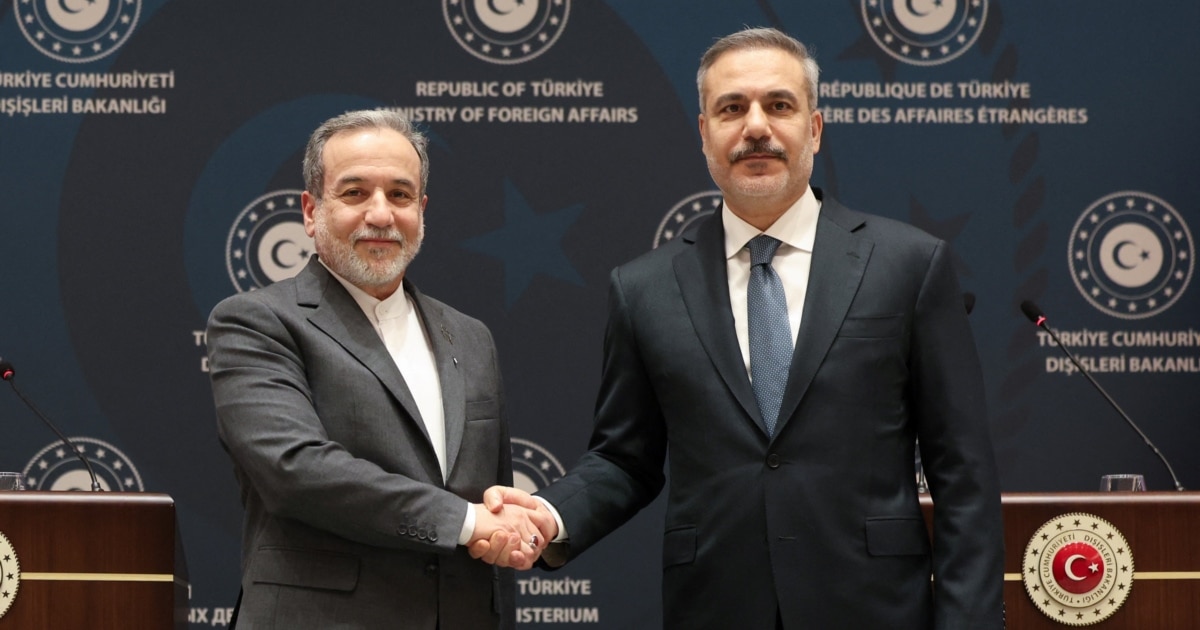
These developments comply with an intense week of shuttle diplomacy: Iran’s safety chief Ali Larijani met with Vladimir Putin in Moscow on January 30, whereas Araqchi traveled to Turkey to seek the advice of with President Erdogan and Overseas Minister Hakan Fidan.
The momentum continued the next day in Tehran, the place each officers met with Qatari Prime Minister Sheikh Muhammad bin Abdulrahman al-Thani, who was broadly alleged to be carrying a message from Washington.
Following these conferences, Larijani famous on X that there had been “progress within the formation of a framework” for talks. Iranian media experiences now counsel a face-to-face assembly in Ankara between White Home particular envoy Steve Witkoff and senior Iranian diplomats might happen “within the coming days.”
Iran has been in turmoil since December 28, when peaceable protesters started taking to the streets in Tehran to demand authorities act to cease spiraling inflation and a sagging foreign money.
Due to cuts to Web service in Iran, it’s tough to evaluate the variety of protesters who’ve been killed throughout the mass demonstrations, which seem to have eased in current days.
The US-based rights group HRANA, whose figures RFE/RL has been frequently citing for the reason that violent crackdown started in Iran in December 2025, says its confirmed dying toll, together with safety forces, is now 6,842, whereas the variety of fatalities nonetheless underneath investigation is 11,280. Greater than 49,000 folks have been arrested.
Some estimates by officers quoted off the document by numerous media shops put the dying toll at a number of instances greater.
Late final month, Trump introduced {that a} “large armada” was transferring towards Iran, warning it may act with “pace and fury” if crucial, whereas expressing hope for a “truthful deal” that would go away Iran with out nuclear weapons.
The US army has deployed a naval strike group, led by the USS Abraham Lincoln plane provider, off the coast of Iran.
Some in Iran have additionally instructed a possible deal would see Iran’s stockpile of extremely enriched uranium — reportedly buried underground following US strikes final June — transferred to a different nation.
Regardless of the general public optimism, analysts warn that the trail to a deal is fraught with inner peril for Tehran.
Spain-based analyst Ata Mohamed-Tabriz advised RFE/RL’s Radio Farda that whereas the Overseas Ministry is signaling flexibility, hard-line parts inside the Islamic Revolutionary Guards Corps (IRGC) view these negotiations as a “misleading sport” and a “lethal poison.”
Past The Nuclear Difficulty
The central query stays: What does a “truthful” deal really appear to be? Whereas Trump maintains that his June strikes “obliterated” Iran’s nuclear program, his calls for have traditionally prolonged far past enrichment.
Germany-based opposition activist Mehdi Fatapour argued that for any settlement to really fulfill the Trump administration and avert struggle, it could doubtless require what quantities to a “strategic give up.”
Talking to Radio Farda, Fatapour stated Washington might demand a complete pivot in Iran’s regional identification, together with an finish to its hostility towards Israel and the abandonment of its regional proxies.
For the Islamic republic, these are usually not simply coverage factors; they’re the ideological pillars of the state, and Iranian authorities have dominated out negotiating over something past the nuclear program.
Even when a framework is agreed upon in Ankara, it could solely function a brief reprieve. Mohamed-Tabriz instructed a “minimal deal” may purchase time however can’t resolve the “large accumulation of social calls for” and inner dissatisfaction presently boiling inside Iran.
Analysts argue the specter of a “regional struggle” stays Tehran’s major bargaining chip. By framing the battle as an existential catastrophe that might engulf the whole Center East, Tehran has efficiently pressured regional mediators like Qatar and Turkey to intervene.
Nevertheless, in keeping with Fatapour, if the Islamic republic chooses the trail of “drip-feed” reforms and minor diplomatic concessions, it could nonetheless face a fierce backlash from a public that’s more and more weary of each sanctions and the specter of struggle.

